Sick in Korea? 5 Rules for Choosing a Pharmacy, Clinic or ER
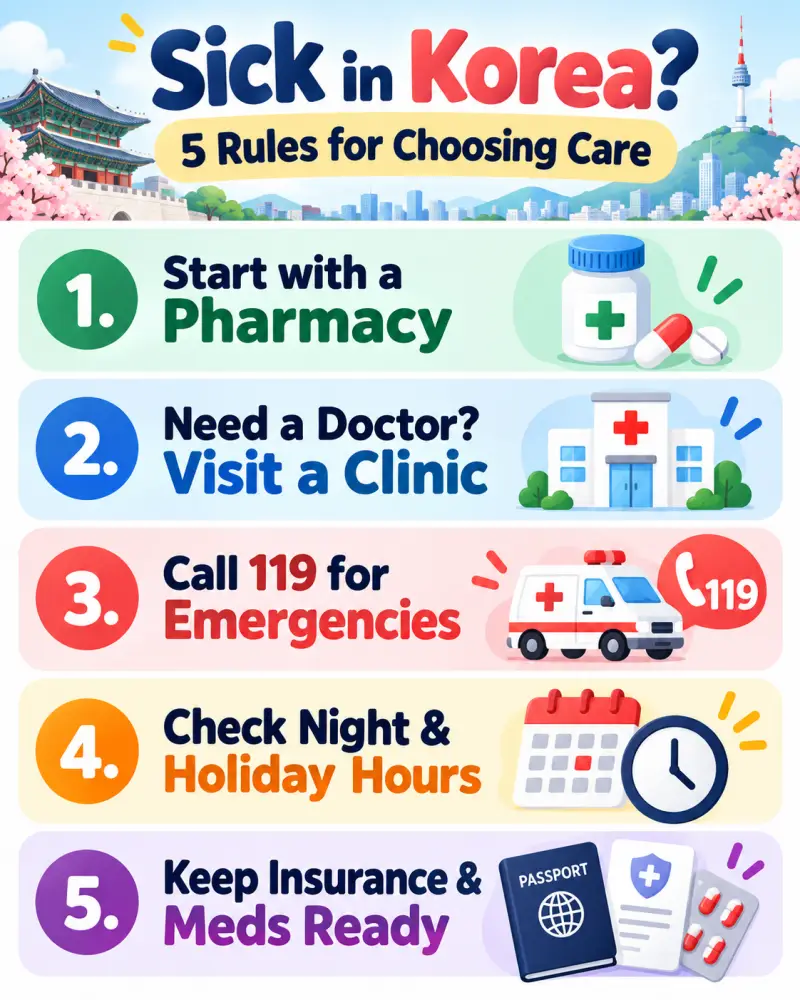
Getting sick during a trip can be stressful—especially when you don’t know where to go or how Korea’s medical system works.
Do you need a pharmacy?
Should you see a doctor?
Or is it serious enough to call an ambulance?
The right choice depends on your symptoms and how urgent the situation is.
This guide is designed to help travelers understand where to look for care in Korea. It is not a substitute for medical diagnosis.
Quick Guide
| Situation | Where to start |
|---|---|
| Need advice about a common over-the-counter medicine | Pharmacy |
| Need a diagnosis, examination or prescription | Clinic / hospital |
| Need foreign-language assistance | International medical center |
| Need care at night or on a holiday | Check E-GEN |
| Serious or life-threatening emergency | Call 119 |
If symptoms are severe, rapidly worsening, or you are unsure whether the situation is an emergency, seek professional medical help promptly.
Rule 1 — For Non-Emergency Problems, Know the Difference Between a Pharmacy and a Clinic
In Korea, a pharmacy is called:
약국
Yakguk · Pharmacy
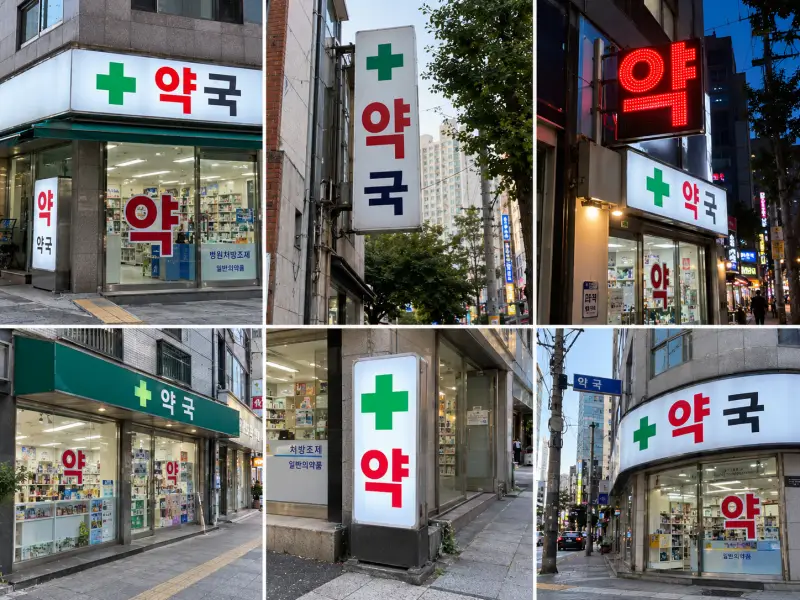
Pharmacists can help with many common over-the-counter medicines and explain how to use them.
VISITKOREA recommends using a translation app or showing a photo of the medicine you normally take if communication is difficult. It also notes that more complex medication needs or prescription drugs may require a medical consultation.
A clinic or hospital, however, is the appropriate place when you need a doctor to examine you, diagnose a condition, or issue a prescription.
A simple rule is:
Medicine advice → Pharmacy
Diagnosis or prescription → Clinic
If symptoms persist, worsen, or concern you, don’t rely only on over-the-counter medicine.
The KoreaRule: A pharmacy can help with medicines; a clinic is where you go when you need medical evaluation.
Rule 2 — Need a Doctor? Look for a Clinic or an International Medical Center
You don’t necessarily need to go straight to a large hospital for every non-emergency problem.
Local clinics handle many routine medical issues.
But if language is a major concern, some of Korea’s larger hospitals operate International Health Care Centers specifically for foreign patients.
VISITKOREA lists major hospitals in Seoul, Busan, Daegu, Incheon and other cities that provide international-patient services and foreign-language assistance.
For example, international centers may provide:
- English-speaking staff or interpreters
- Help arranging appointments
- Assistance during examinations and treatment
- Support obtaining medical documents
Language support, operating hours and appointment requirements vary by hospital.
For a non-emergency visit, check the hospital’s international center before traveling there.
The KoreaRule: If language support matters, look for an international medical center—but check its hours and appointment rules first.
Rule 3 — Serious Emergency? Call 119
For a serious medical emergency in Korea, call:
119
Ambulance · Fire · Medical Emergency
Korea’s emergency medical system uses 119 for ambulance dispatch.
Examples of situations that may require emergency help include severe breathing difficulty, loss of consciousness, heavy bleeding, major trauma, or other potentially life-threatening symptoms.
If you don’t speak Korean, VISITKOREA advises saying:
English please.
or
Interpreter please.
The emergency operator can connect you to interpretation assistance.
When calling, be ready to explain or show your location. Nearby buildings, hotel names, street addresses, and your smartphone’s GPS can help emergency services locate you.
The KoreaRule: For a serious emergency, don’t search for a pharmacy—call 119.
Rule 4 — Sick at Night? Check What’s Open Before You Go
A clinic or pharmacy that is open during the day may be closed at night, on Sundays, or during public holidays.
Korea’s E-GEN Emergency Medical Portal, operated through the national emergency medical system, provides information about medical facilities and pharmacies that are open outside normal hours.
E-GEN itself warns that operating hours can change and recommends confirming by phone before visiting.
E-GEN
Use it to look for:
- Clinics
- Hospitals
- Emergency medical facilities
- Pharmacies
- Facilities operating on holidays
E-GEN Emergency Medical Portal
If you’re simply looking for a late-night pharmacy, this can prevent you from traveling to a location that is already closed.
But if the situation is a serious emergency, use 119 instead of spending time searching online.
The KoreaRule: At night or on holidays, check current opening information before traveling.
Rule 5 — Keep Your Medical Information Ready
A few minutes of preparation before your trip can make medical care much easier.
Keep the following information accessible on your phone:
- Passport information
- Travel insurance details
- Current medications
- Active ingredients and dosage
- Medication allergies
- Relevant medical records
- Emergency contact information
VISITKOREA specifically recommends bringing medical records or an English prescription when travelers may need complex or prescription medication, and keeping backup photos in case documents are lost.
If you take regular medication, a photo of the original packaging can also help a pharmacist or doctor understand what you use.
For travel insurance, check your policy’s instructions before paying for non-emergency treatment when practical. Some insurers may require particular documents or contact procedures for reimbursement.
The KoreaRule: Keep your medication, allergy, insurance and identification information where you can access it quickly.
The KoreaRule
PHARMACY → CLINIC → CHECK HOURS →
119 IF EMERGENCY → KEEP YOUR INFO READY
Use the level of care that matches the situation, and don’t delay emergency treatment when symptoms are serious.
Continue Planning Your Korea Trip
Just need help using a Korean pharmacy?
→ Korean Pharmacy Rules: 5 Things Tourists Should Know
Need to find a clinic or pharmacy nearby?
→ Google Maps in Korea? 5 Rules for Using NAVER Map & KakaoMap
Need mobile internet while traveling?
→ Korea eSIM vs SIM Card vs Pocket Wi-Fi: Which Is Best for Travelers?
Before Your Trip
- Save 119 in your travel notes.
- Keep a photo of your passport.
- Save your travel insurance details.
- Photograph your regular medications.
- Record important allergies and medical information.
- Know how to find E-GEN if you need care outside normal hours.
FAQ
Can tourists visit a pharmacy in Korea?
Yes. Tourists can visit Korean pharmacies and buy medicines that are available without a prescription. Prescription-only medication may require a doctor’s consultation and an appropriate prescription.
Should I go to a pharmacy or a clinic?
A pharmacy can help with over-the-counter medicines and medication questions. If you need a diagnosis, examination, prescription, or your symptoms are persistent or worsening, seek medical care at a clinic or hospital.
Can I find English-speaking doctors in Korea?
Yes. Many large hospitals operate international medical centers with foreign-language assistance. Availability and supported languages vary by facility.
What number do I call for an ambulance in Korea?
Call 119 for a medical emergency.
What if I don’t speak Korean when calling 119?
After connecting, say “English please” or “Interpreter please.” Official Korean tourism guidance says the operator can connect foreign callers with interpretation support.
How do I find a clinic or pharmacy open at night?
Use Korea’s E-GEN emergency medical portal to search for operating medical facilities and pharmacies. Because listed hours can change, confirm operating hours before visiting when possible.
Should I bring travel insurance documents to a Korean hospital?
It’s useful to keep your policy information and identification with you. Insurance reimbursement and direct-billing arrangements differ by insurer and medical facility, so check your policy’s requirements.
Sources
VISITKOREA — Emergency Situations
Official Korea Tourism Organization guide covering 119, emergency contacts and international medical centers for foreign travelers.
VISITKOREA — Pharmacy Guide in Korea
Official guide explaining pharmacy communication, translation tools, prescriptions and preparing medical records.
National Emergency Medical Center — Emergency Medical Services System
Official information confirming 119 as Korea’s emergency medical access number and explaining ambulance response.
E-GEN — Emergency Medical Portal
Official emergency medical portal for finding open medical facilities and pharmacies. E-GEN advises confirming operating hours before visiting.
VISITKOREA — Disaster Safety Services for International Visitors
Official guidance explaining emergency interpretation when foreign travelers call 119.